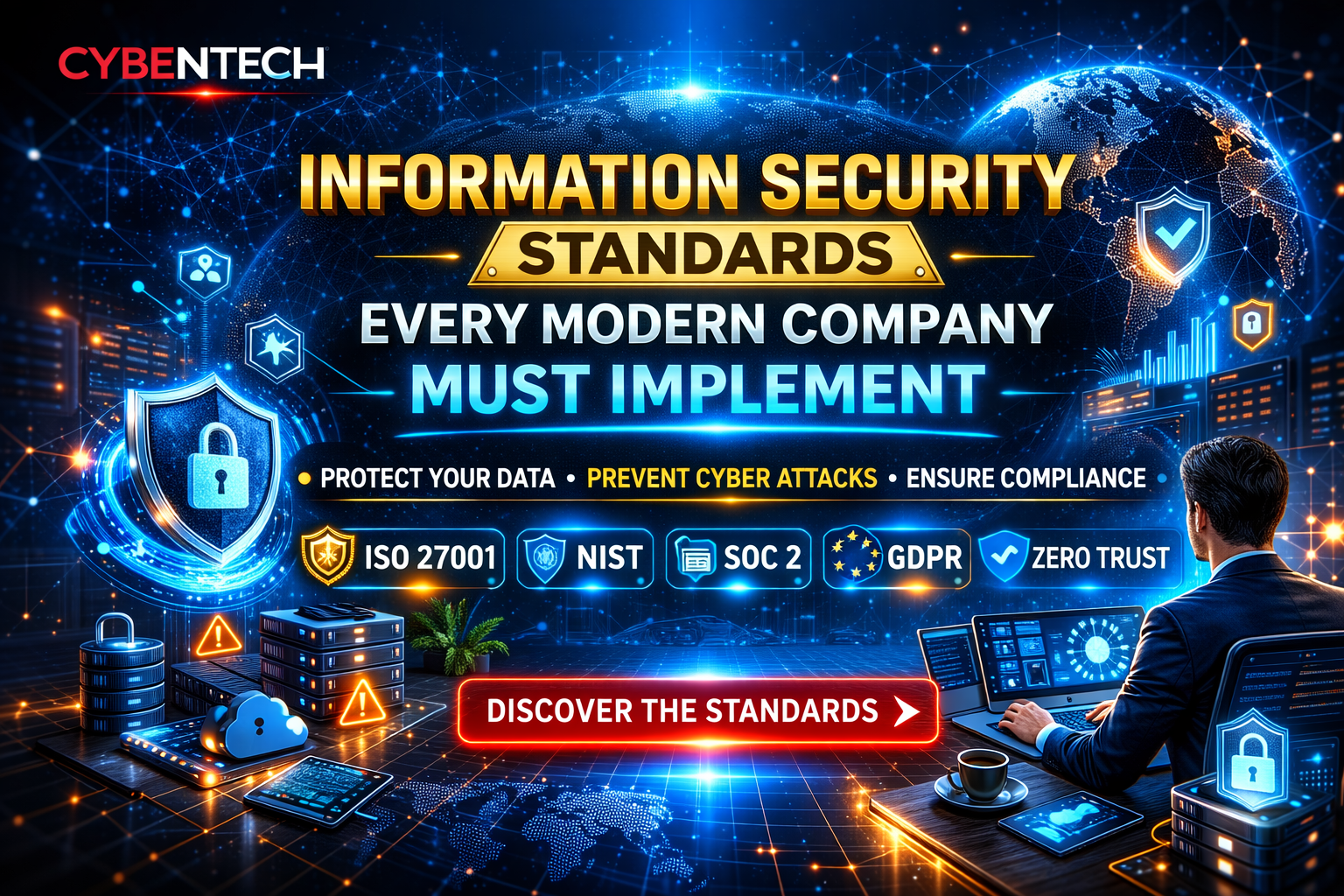
Information Security Standards Every Modern Company Must Implement
Discover the essential information security standards every modern organization...
Read More
In today’s hyper-connected digital landscape, cyber threats are no longer a question of if but when. From ransomware attacks to data breaches and insider threats, organizations of all sizes face unprecedented risks. Implementing recognized information security standards is no longer optional — it is a critical business requirement.
Modern companies must adopt internationally accepted frameworks and best practices to protect sensitive data, maintain regulatory compliance, and safeguard their reputation. Below are the most important information security standards every forward-thinking organization should implement.
The gold standard for information security management is ISO/IEC 27001, developed by the International Organization for Standardization.
Establishes a comprehensive Information Security Management System (ISMS)
Protects confidentiality, integrity, and availability of data
Enhances stakeholder trust
Demonstrates international compliance readiness
Reduces risk of breaches and downtime
Organizations certified under ISO 27001 systematically identify risks, implement controls, and continuously improve their security posture.
Why it matters: Many global partners and enterprise clients require ISO 27001 certification before doing business.
Developed by the National Institute of Standards and Technology, the NIST Cybersecurity Framework is widely used across industries worldwide.
Identify — Understand risks and assets
Protect — Implement safeguards
Detect — Monitor for anomalies
Respond — Manage incidents effectively
Recover — Restore operations quickly
NIST CSF is particularly valuable for organizations seeking a practical, risk-based approach without formal certification requirements.
SOC 2 (System and Organization Controls) is crucial for SaaS companies, cloud providers, and technology vendors.
Security
Availability
Processing Integrity
Confidentiality
Privacy
SOC 2 reports provide assurance to customers that your systems are designed to keep their data secure.
Data protection laws such as the EU’s General Data Protection Regulation (GDPR) set strict requirements for handling personal data.
Transparent data processing practices
Strong access controls
Data minimization
Breach notification procedures
User rights management
Even companies outside Europe must comply if they process EU citizens’ data.
Modern security strategies are shifting from perimeter-based defenses to a Zero Trust architecture.
Never trust, always verify
Continuous authentication
Least-privilege access
Micro-segmentation
Real-time monitoring
Zero Trust significantly reduces the risk of lateral movement during breaches.
Passwords alone are no longer sufficient.
One-time codes (OTP)
Biometric verification
Hardware tokens
Authenticator apps
Implementing MFA can block the vast majority of automated credential attacks.
Even well-designed systems contain weaknesses. Continuous testing identifies exploitable vulnerabilities before attackers do.
External and internal penetration testing
Web application security testing
Network vulnerability scanning
Red team exercises
Security configuration reviews
This proactive approach reduces the likelihood of successful cyberattacks.
Human error remains the leading cause of data breaches.
Effective programs include:
Phishing simulation exercises
Password hygiene education
Secure remote work practices
Incident reporting procedures
Social engineering awareness
A security-conscious workforce acts as the first line of defense. 🛡️
Organizations must be prepared not only to prevent attacks but also to respond effectively.
Incident response playbooks
Disaster recovery plans
Data backup strategies
Crisis communication procedures
Recovery time objectives (RTO/RPO)
Fast response can dramatically reduce financial losses and reputational damage.
Security is not a one-time project — it is an ongoing process.
Modern organizations deploy:
Security Information and Event Management (SIEM)
Endpoint Detection and Response (EDR)
Network monitoring tools
Threat intelligence integration
Automated alerting systems
Continuous visibility enables rapid detection of suspicious activities.
Failing to implement proper standards can result in:
Financial losses from cyber incidents
Legal penalties and regulatory fines
Operational disruption
Loss of customer trust
Competitive disadvantage
Long-term reputational damage
Strong security practices are now a business enabler, not just an IT requirement.
CYBENTECH provides a comprehensive range of cybersecurity services designed to help organizations protect their critical systems, sensitive data, and digital infrastructure — including advanced Penetration Testing.
Our experts help businesses:
Identify security gaps
Strengthen defenses
Achieve compliance readiness
Reduce cyber risk exposure
Build resilient security architectures
Contact the CYBENTECH team today to learn how our cybersecurity solutions can safeguard your business from evolving cyber threats. 🔐💻
In an era of sophisticated cybercrime and strict regulatory requirements, adopting recognized information security standards is essential for survival and growth. Organizations that prioritize security not only protect themselves from attacks but also gain a powerful competitive advantage.
Investing in cybersecurity today means securing your company’s future tomorrow. 🚀
Discover the essential information security standards every modern organization...
Read More
Modern companies hold valuable data, financial assets, and critical...
Read More
Cyberattacks can devastate a company’s finances, operations, and brand trust....
Read More