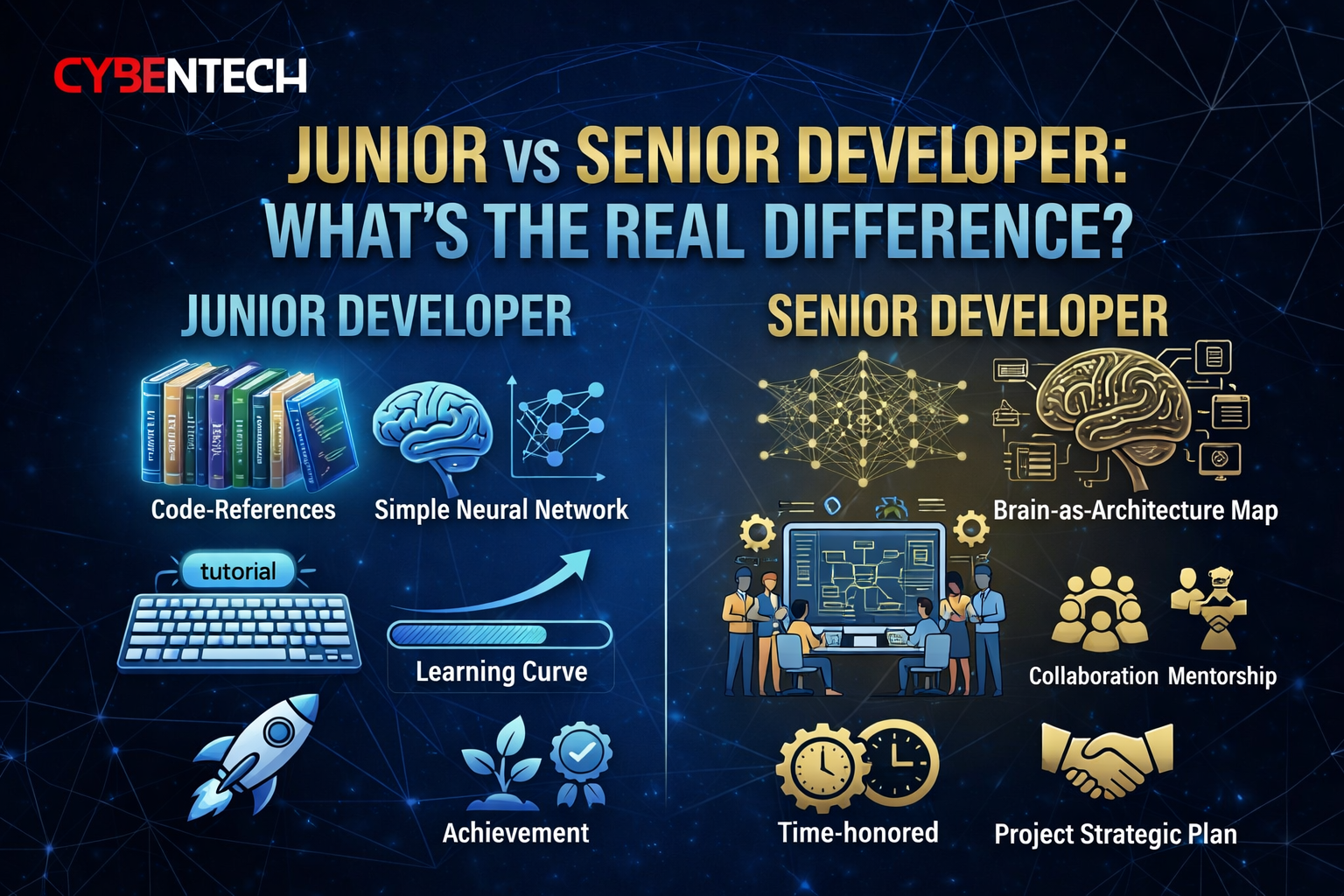
Junior vs Senior Developer: Whats the Real Difference?
Explore the key distinctions between junior and senior developers, from...
Read More
In the world of software development, the terms "junior" and "senior" get thrown around a lot. But what truly separates these two levels? Is it just years of experience, or is there something deeper at play?
Understanding these differences can help developers chart their career paths and set meaningful goals for professional growth.
The most obvious difference lies in years of professional experience. Junior developers typically have 0-2 years in the industry, while senior developers often bring 5+ years to the table.
But here's the thing—time alone doesn't create a senior developer. It's what happens during those years that truly matters.
A developer with five years of experience might still think like a junior if they've worked on similar projects with the same technologies. Meanwhile, someone with three years of intense, varied experience could already demonstrate senior-level thinking.
Master one programming language or framework
Focus on writing code that works
Learn new technologies as needed for specific tasks
Often rely heavily on documentation and tutorials
Understand multiple languages and paradigms
Write code that's maintainable, scalable, and efficient
Choose the right technology for the problem, not just what they know
Can learn new technologies quickly by recognizing patterns
Seniors don't just know more—they think differently about code. They consider future maintenance, potential edge cases, and system architecture from the start.
Watch how each level tackles a bug:
A junior developer might:
Search Stack Overflow for the exact error message
Try random solutions until something works
Fix the immediate symptom without understanding the root cause
A senior developer will:
Understand the system well enough to hypothesize potential causes
Use debugging tools strategically
Fix the underlying issue and document it for future reference
Seniors understand that quick fixes often create technical debt. They balance immediate needs with long-term system health.
Junior developers thrive with clear instructions and well-defined tasks. They're learning how to translate requirements into working code and appreciate regular feedback.
Senior developers can take vague requirements and turn them into technical specifications. They identify what needs to be done without being told and anticipate problems before they happen.
A senior doesn't wait for someone to assign tasks—they see what needs improvement and take ownership.
In code reviews, juniors learn from feedback and gradually improve their coding style. They might feel defensive initially but grow to appreciate the learning opportunity.
Seniors provide constructive feedback that helps others grow. They review code with empathy, focusing on the code's quality rather than criticizing the developer.
More importantly, seniors recognize that reviewing code is about sharing knowledge and maintaining quality standards—not about showing who's smarter.
Software development is full of ambiguous situations.
Juniors often feel uncomfortable with uncertainty. They want clear requirements and specific instructions before starting work.
Seniors have learned to embrace ambiguity. They ask clarifying questions, propose multiple solutions, and guide stakeholders toward better decisions. They understand that requirements will change and build systems flexible enough to adapt.
Junior developers typically focus on technical implementation. "How do I build this feature?"
Senior developers ask different questions: "Why are we building this? What problem does it solve for users? How does this align with business goals?"
This shift from pure technical thinking to business-aware technical thinking marks a crucial transition in a developer's career.
A junior developer's impact is primarily through their individual contributions.
A senior developer's impact multiplies through others. They mentor juniors, document decisions, improve team processes, and create an environment where everyone can do their best work.
Seniors measure their success not just by their own output, but by how much they elevate the entire team.
Moving from junior to senior isn't automatic. It requires intentional effort:
Work on diverse projects with different technologies
Learn to communicate technical concepts to non-technical people
Understand the business side of software development
Develop empathy for users and colleagues
Take ownership of failures and learn from mistakes
Share knowledge through documentation, mentoring, or presentations.
The junior vs senior distinction goes far beyond coding ability. It encompasses mindset, communication, business awareness, and team impact.
A senior developer might write less code than a junior, but the code they write is more valuable. They prevent problems instead of just fixing them. They make everyone around them better.
Whether you're just starting your journey or aiming for that senior title, remember that growth comes from challenges, reflection, and a genuine commitment to continuous improvement.
The best developers never stop learning—regardless of their title.
Keep following CYBENTECH for more insights into the world of IT, programming, and technology!
Written by the CYBENTECH Team - Helping developers around the world grow and thrive. 🌍 ✨
Explore the key distinctions between junior and senior developers, from...
Read More