
10 Types of Cyber Attacks That Most Often Target Companies
Cyberattacks can lead to data breaches, operational disruptions, and...
Read More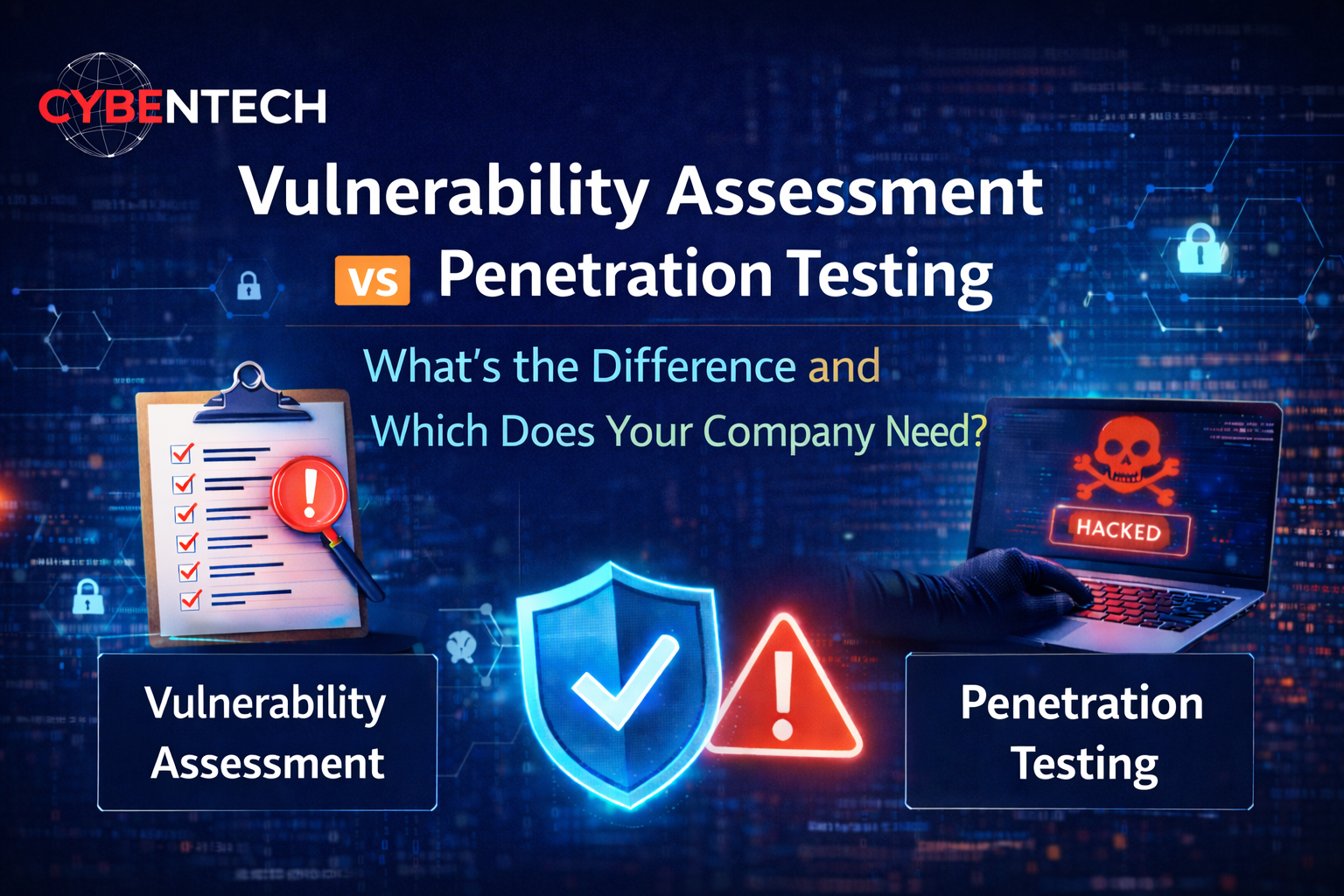
In today’s digital era, cyber threats are becoming increasingly sophisticated. Companies rely heavily on IT systems, cloud infrastructure, and web applications to run their operations. Unfortunately, these systems also become attractive targets for cybercriminals.
To protect their systems, many organizations implement security testing methods such as Vulnerability Assessment and Penetration Testing.
However, many companies still confuse these two approaches.
So, what exactly is the difference between Vulnerability Assessment and Penetration Testing, and which one does your company actually need?
Let’s explore.
A Vulnerability Assessment is a security process used to identify, analyze, and prioritize vulnerabilities within a system, network, or application.
The goal is to detect potential security weaknesses before attackers exploit them.
This process typically uses automated scanning tools combined with security analysis to find vulnerabilities such as:
Outdated software versions
Weak configurations
Missing security patches
Open ports
Known system vulnerabilities
Instead of exploiting vulnerabilities, vulnerability assessments focus on identifying and reporting them.
Automated vulnerability scanning
Identifies known vulnerabilities
Provides risk severity levels
Generates remediation recommendations
Usually performed regularly (monthly or quarterly)
Vulnerability assessments help companies maintain continuous security monitoring.
Penetration Testing, often called Pentesting, is a simulated cyber attack performed by security professionals to test how secure a system actually is.
Unlike vulnerability assessments, penetration testing goes further by actively exploiting vulnerabilities to determine whether attackers could gain access to sensitive systems or data.
The goal is to simulate real-world cyber attacks.
Security professionals attempt to bypass defenses, escalate privileges, and access sensitive information just like a hacker would.
Manual security testing by experts
Simulates real-world hacking techniques
Exploits vulnerabilities to assess impact
Identifies security gaps in processes and systems
Provides detailed security reports
Penetration testing helps companies understand how attackers could compromise their systems.
Although both aim to improve cybersecurity, they serve different purposes.
Aspect Vulnerability Assessment Penetration Testing Purpose Identify vulnerabilities Exploit vulnerabilities Approach Automated scanning Manual attack simulation Depth Broad but shallow Deep and targeted Frequency Regular (monthly/quarterly) Periodic (annually or after major updates) Output List of vulnerabilities Proof of exploitation
In simple terms:
Vulnerability Assessment tells you what weaknesses exist.
Penetration Testing shows how those weaknesses can be exploited.
Vulnerability assessments are ideal when companies want to continuously monitor their security posture.
Organizations should perform vulnerability assessments when:
Managing large IT infrastructures
Maintaining multiple servers and applications
Monitoring system security regularly
Preparing for security compliance audits
Identifying vulnerabilities quickly
Because vulnerability assessments can be automated, they are typically conducted more frequently.
Penetration testing is recommended when companies need deeper security validation.
Situations where penetration testing is critical include:
Launching a new web application
Deploying a new IT system
Before major product releases
Preparing for security compliance (ISO 27001, PCI DSS)
Investigating suspected vulnerabilities
Penetration testing helps organizations understand the real impact of vulnerabilities.
Many organizations believe they must choose between vulnerability assessment and penetration testing.
In reality, the most effective cybersecurity strategy uses both.
A strong security approach usually follows this process:
Vulnerability Assessment identifies potential weaknesses.
Penetration Testing verifies whether attackers can exploit them.
Security teams fix and improve defenses based on the findings.
This layered strategy provides comprehensive security visibility.
Without regular security testing, organizations expose themselves to serious cyber risks such as:
Data breaches
Ransomware attacks
Financial losses
Reputation damage
Regulatory penalties
Cyber attacks today are often automated, meaning even small vulnerabilities can quickly become entry points for attackers.
At Cybentech, we help organizations strengthen their cybersecurity posture through professional security testing services, including: Penetration Testing
Our cybersecurity experts simulate real-world attack scenarios to identify vulnerabilities before hackers do.
This allows companies to protect critical systems, sensitive data, and business operations.
Understanding the difference between Vulnerability Assessment and Penetration Testing is essential for building a strong cybersecurity strategy.
Vulnerability Assessment identifies security weaknesses.
Penetration Testing demonstrates how attackers could exploit them.
Together, these methods help organizations detect risks early and strengthen their defenses against cyber threats.
For companies serious about cybersecurity, implementing both testing approaches is no longer optional — it is a critical security requirement.
Cyberattacks can lead to data breaches, operational disruptions, and...
Read More
Many companies are still unsure whether they need a Vulnerability Assessment or...
Read More
Cybersecurity has become a critical necessity for companies in the digital era....
Read More